When people talk about basketball legends, they usually remember the jerseys first.
The iconic numbers.
The championship moments.
The uniforms soaked in sweat and lit by arena lights.
In exhibitions and auctions, jerseys are often displayed like sacred artifacts — symbols of glory and victory.
But over time, I realized something:
The real companion through every sprint, pivot, jump, and landing… was the shoes.
The shoes carried the weight.
The impact.
The pressure of every movement.
That’s why the culture of “game-worn shoes” became such a phenomenon in basketball.
Shoes worn during historic games are carefully preserved, displayed, and sometimes auctioned for astonishing prices. Beside them are stories like:
“This was the pair worn during the championship finals.”
“These shoes witnessed a record-breaking performance.”
“This pair carried the player through one of the greatest comeback games in history.”
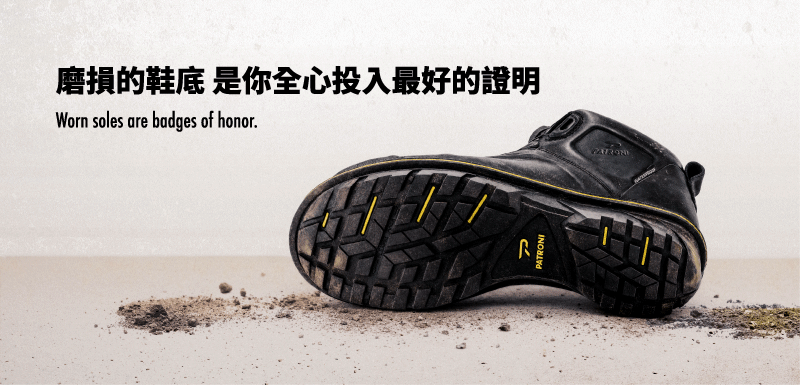
Some still carry visible scars — worn soles, tape residue, sweat marks, and creases shaped by time.
And it made me realize something interesting:
We tend to celebrate the jersey because it’s more visible.
But the thing closest to the ground — the thing absorbing the friction, impact, and damage — has always been the shoes.
In many ways, shoes are the most underrated heroes in sports.
And suddenly, I started thinking:
What about safety shoes?
Aren’t they often underestimated too?
Because workers’ shoes are not worn down under spotlights.
They’re worn down quietly, little by little, during everyday work.
They step across construction sites scattered with nails.
Through puddles, mud, gravel, and steel debris.
Across burning asphalt under the summer sun.
Back and forth between rainstorms and heat.
Sometimes the soles are filled with metal fragments.
Sometimes the shoes are covered in dust, grease, and dirt.
Sometimes the surface carries every trace of a long day’s work.
But truly great safety shoes are not the ones that stay looking brand new forever.
They are the ones that continue protecting you after enduring all of this.
Not long ago, I interviewed a worker who spends his days in extremely hazardous environments.
He told me:
“Your shoes make my feet feel numb.”
At first, I didn’t understand what he meant.
Then he laughed and explained:
“Because when I step on nails, I don’t even feel them.”
He had walked through construction zones covered with sharp nails and walked away completely unharmed. Not because the site was safe — but because the anti-puncture protection inside PATRONI safety shoes silently absorbed the danger for him.
That was his humor.
But to me, it sounded like pride.
Athletes measure achievements in points and trophies.
Workers measure achievement differently.
Sometimes, success simply means:
Nothing happened.
No injuries.
No falls.
No punctures.
No one failing to make it home.
All the impact, friction, and danger absorbed by the soles eventually become scars on the shoes instead of scars on the body.
That’s why customers often ask us:
“How long will the soles last?”
Honestly, there’s no universal answer.
Because the lifespan of a pair of safety shoes is not measured only by time.
It’s measured by what the shoes go through every single day.
Someone who visits a construction site once a week will wear shoes very differently from someone constantly walking through high-risk environments filled with steel, concrete, and sharp debris.
Some shoes are worn down by time.
Others are worn down by battle.
That’s also why we often recommend keeping two pairs in rotation if your workload is heavy.
One pair for work.
One pair for drying and recovery.
Even shoes deserve time to breathe.
Because safety shoes are not just consumable equipment.
They are silent partners standing beside workers every day.
A truly good pair of safety shoes is not one that never wears out.
It’s one that quietly protects you from countless accidents before it finally does.
And one day,
you replace them with a new pair — and continue forward.
Because the greatest achievement is not surviving through injury.